Slow Travel 2026: Why More Travelers Are Ditching Rush Vacations
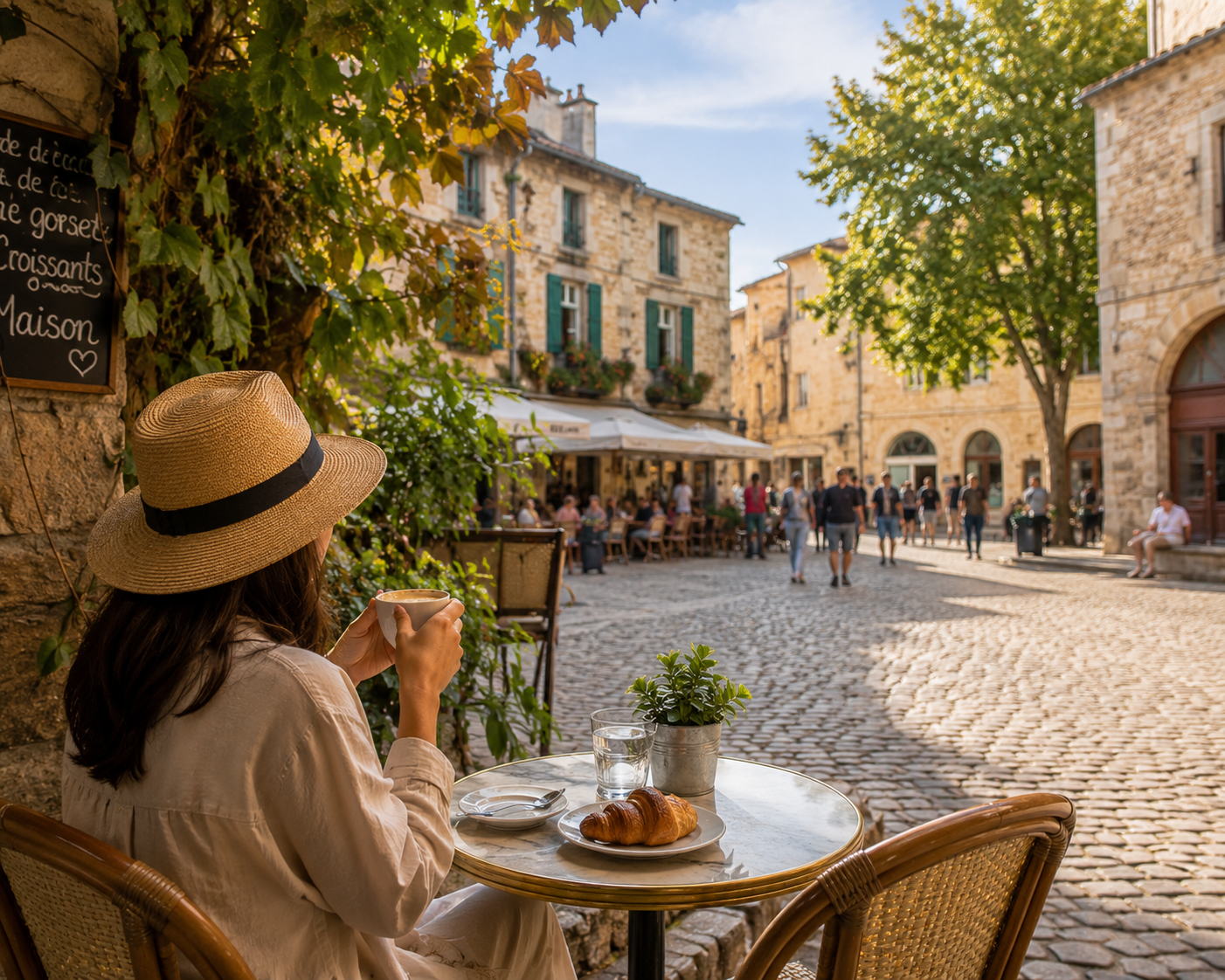
Slow travel in 2026 is not about doing less. It is about experiencing more — trading the blur of five cities in nine days for the depth of nine days fully lived in one.
Slow travel in 2026 is the biggest shift in vacation planning in a generation — and according to Vrbo, 91% of travelers say they want it. Use our free Best Time to Travel Calculator to find uncrowded slow travel spots. Build your budget with the Vacation Budget Calculator. Find the ideal timing with the Best Time to Travel Calculator. Protect your extended stay with the Travel Insurance Checker. All tools are free at the Etravels Everywhere Travel Tool Hub. Book a free consultation to plan your slow travel experience today.
There is a moment that every overpacked traveler knows. You are standing in front of a famous landmark, phone raised for a photo, and you realize you have been in this city for three hours, seen four things, and felt absolutely nothing. Slow travel in 2026 is the direct response to that feeling — and it is reshaping how millions of Americans plan their vacations. This guide explains what slow travel actually is, why it is exploding right now, where to do it, and how to book one for yourself.
What Is Slow Travel in 2026?
The Definition That Changes How You Vacation
At its simplest, slow travel means spending more time in fewer places. Instead of hitting five cities in nine days, a slow traveler might spend all nine in one — staying in a small guesthouse, eating where locals eat, and walking neighborhoods instead of bouncing between tour buses. As a result, the vacation does not feel like a race. Instead, it feels like actually being somewhere rather than passing through it.
Slow travel is a movement rooted in the belief that the most meaningful journeys are not measured by how many places you visit, but by how deeply you experience each one. Furthermore, the approach prioritizes cultural immersion, local dining, and walkable or car-free environments, with many finding the slower pace more restorative. In short, slow travel is the vacation that actually recharges you — instead of leaving you needing a vacation from your vacation.
Where Did Slow Travel Come From?
The slow travel concept stems from the broader Slow Movement, which began with Carlo Petrini’s International Slow Food initiative in 1989. Hallmarks include flexible schedules, nature-based activities, and regional cuisine, with travelers often staying in small guesthouses or Airbnbs offering long-stay discounts. Moreover, the goal is to create space for spontaneous, memorable moments such as local festivals or hidden trails, rather than sticking to rigid timetables.
“American travelers are approaching 2026 with confidence, but also with intention. We’re seeing sustained demand for travel, paired with more thoughtful decisions around destinations, budgets, and protection.”
— Paul-Adrien Maizener, CEO, Generali Global Assistance · 2026 Holiday BarometerSlow Travel 2026: Fast vs. Slow — Side by Side
See the Difference at a Glance
Nothing explains the slow travel difference better than a direct comparison. Here is the same 10-day Europe trip — fast versus slow. Notice which version you would actually remember in 20 years.
Day 1: Fly to Paris. Drag luggage to hotel. Collapse.
Day 2: Eiffel Tower, Louvre, Notre Dame. 14,000 steps. Zero meals sat down for.
Day 3: Train to Amsterdam. Repack. Find hotel. Re-orient.
Day 4–5: Amsterdam highlights. Exhausted. Behind on sleep.
Day 6: Train to Barcelona. Another hotel. Another city map.
Day 7–10: Three more cities. Everything blurs together.
Home: “I need a week to recover from my vacation.”
Day 1–2: Arrive. Find your neighborhood café. Sleep in.
Day 3: Walk Alfama. Stumble into a fado performance. Stay two hours.
Day 4: Wine tasting. Long lunch. Back for a nap. Dinner at 9 PM like a local.
Day 5–6: Day trip to Sintra. Day trip to Cascais coast.
Day 7: Market morning. Cook in the apartment. Read on the terrace.
Day 8–10: You have a favorite table. The waiter knows your order.
Home: “I feel like a completely different person.”

Slow travel looks like this — a local market on a Tuesday morning, no itinerary pressure, and the best meal of your life at a place with no English menu and no TripAdvisor reviews.
Why Slow Travel Is Exploding in 2026
Three Forces That Made This the Year of Slow Travel
Slow travel has been growing for years — but 2026 is the year it became the dominant travel philosophy. Three specific forces converged to make this happen simultaneously.
Burnout Is Real — and Travel Is the Treatment
Mental Health Driving Vacation ChoicesAnalysts point to burnout and mental health as primary forces behind the slow travel shift. Travel trend overviews describe “quiet escapes” and “intentional travel” as responses to stress and information overload, where the goal is to support mental health rather than chase maximal stimulation. Consequently, travelers are no longer choosing vacations based on how many places they can check off a list. Instead, they are choosing based on how restored they will feel when they return.
The 2026 traveler seeks connection over consumption — understanding the soul of a destination rather than just cataloguing its statistics. This pivot is driven by collective introspection and increased awareness of mental health, ethical consumption, and sustainability. In other words, slow travel is not just a vacation format — it is a response to the culture we are all living in right now.
Remote Work Made Extended Stays Possible
Workcations and Digital Nomad Visas = Slow Travel InfrastructureRemote work has made extended stays increasingly popular among professionals. Longer visits provide stability, allowing travelers to integrate work and exploration smoothly. As a result, many destinations now offer digital nomad visas, co-living apartments, and community workspaces to support long-term mobility. Structural conditions for slow travel are now genuinely in place in a way they were not five years ago.
Furthermore, almost 60% of Gen Z and Millennial travelers took at least two holidays of five nights or more in 2025, and intend to increase travel budgets in 2026 with a strong focus on longer stays. Additionally, destinations like Medellin, Lisbon, Bali, and Chiang Mai have built entire infrastructure ecosystems around long-stay travelers — making month-long stays logistically simple in a way that was not previously possible.
The Financial Case for Slow Travel in 2026
Slow Travel Actually Costs Less
Fewer Flights and Local Discounts = Better ValueLower costs are one of the defining benefits of slow travel. Fewer moves mean reduced transport costs, more local spending, and smaller carbon footprints. Moreover, long-stay discounts on apartments and guesthouses frequently reduce nightly rates by 30–50% for stays of 7 days or more. When you add up the savings from fewer flights, fewer hotel check-ins, and cooking some of your own meals in an apartment kitchen, a 10-day slow travel trip frequently costs less per day than a 5-day multi-city rush. Consequently, slow travel is both more fulfilling and more affordable — an unusual combination in the travel world.
Slow Travel 2026: The 6 Principles That Define It
How to Actually Travel Slowly
Slow travel is not just about staying longer. It is a set of intentional choices that add up to a completely different vacation experience. Here are the six principles that experienced slow travelers use to build trips that genuinely transform them.
-
1. Pick One Base — Stay 7 to 10 Days Minimum
Pick one base. Stay 7 to 10 days in a single spot instead of city-hopping. This single decision changes everything about the trip. Furthermore, it eliminates the daily repacking, the constant reorientation, and the mental energy drain of perpetual transit. When you have 10 days in one city, you can spend day one just walking. Day two discovering a neighborhood you love. By day five, you have a favorite café and a waiter who recognizes you. That is a vacation.
-
2. Live Like a Local — Rent in a Residential Neighborhood
Renting in a residential neighborhood rather than a tourist district is the single most transformative slow travel decision available. Consequently, morning walks look like a real neighborhood rather than a theme park. Shopping happens at the same market locals use. Dinner options become wherever residents actually eat — not whatever is on the tourist strip. Additionally, residential neighborhood apartment rentals consistently run 40–60% below tourist district hotel pricing, making the better experience also the more affordable one.
-
3. Leave Half the Itinerary Empty
Leave room for spontaneity. Plan only about half the trip so you can follow local recommendations. The best moments in slow travel are unplanned — the street festival you walked into by accident, the waterfall a shopkeeper told you about, the family dinner that started as a quick café stop. Moreover, planning every hour removes the space where those moments happen. A half-planned itinerary is not a failed itinerary. It is the itinerary that leaves room for the best part.
-
4. Walk the Last Mile Everywhere
Walk the last mile. Architecture and street life disappear from inside a taxi. The experience of a city lives at street level — in the sounds, the smells, the details of a doorway or a mural. Uber and taxis are efficient, but efficiency is not the point of slow travel. Walking a neighborhood slowly is how you discover the bakery that has been there for 80 years, the corner where teenagers hang out after school, and the view that no travel guide has ever mentioned.
-
5. Eat Off the Tourist Strip
Eat off the tourist strip. Look for short seasonal menus in the local language, not laminated guides in five. Furthermore, the rule of thumb in most destinations is simple: if the menu has photographs of the food, it is for tourists. If it is on a chalkboard and half of it is in a language you cannot read, you have found the right place. The best meal of your slow travel trip will be somewhere you almost walked past — and it will cost a fraction of what the tourist restaurants charge.
-
6. Choose a Farm Stay or Nature Base
One of the clearest markers of the slow travel boom is the explosion of interest in farm stays. According to data from Expedia, Vrbo and Hotels.com, 84% of travelers say they want to stay on or near a farm in 2026. Moreover, “readaways” — reading retreats hosted in rural locations from Maine to New Mexico — are routinely selling out at $900 to $1,500 per person. The connection to nature, to food sources, and to a quieter rhythm of life is exactly what slow travel delivers at its best. Use our free Best Time to Travel Calculator to find the best time for uncrowded farm stay and nature destinations.
Daily Habits That Define Slow Travel
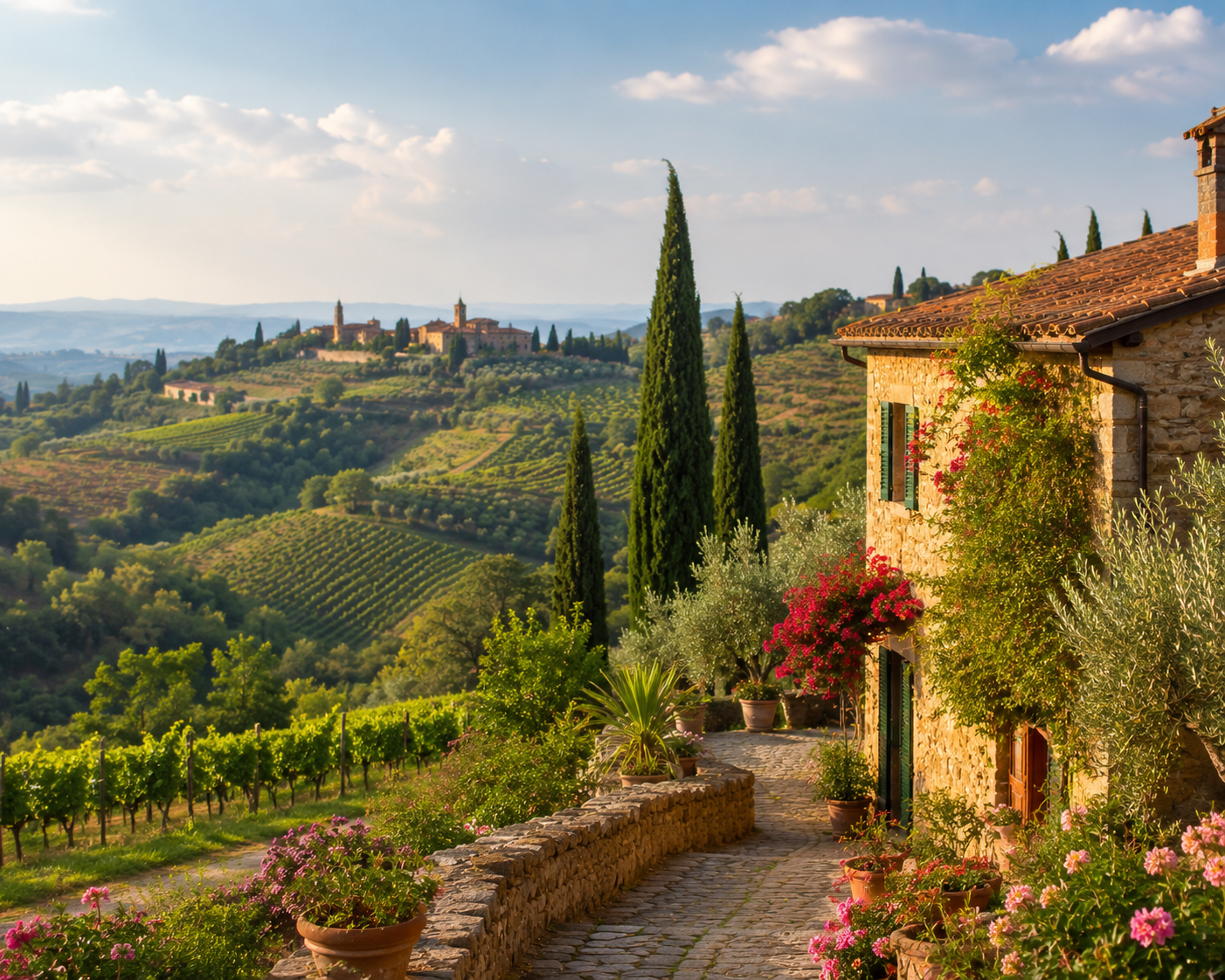
The best slow travel destinations share one quality — they reward depth. The longer you stay, the more they reveal. Tuscany, the Algarve, and the Caribbean’s quieter islands are where slow travel lives in 2026.
Best Slow Travel Destinations for 2026
Where to Go When You Have Nowhere to Be
The best slow travel destinations share specific qualities — they are walkable, have strong local food cultures, offer affordable long-stay accommodation, and deliver the kind of daily rhythm that restores rather than exhausts. Here are the top slow travel destinations for 2026, ranked for American travelers.
Tuscany & Umbria, Italy
#1 Slow Travel Destination · “Slow Travel Italy” Searches Up 18%
Italy invented slow travel before the term existed. Tuscany’s hilltop villages, farm-to-table dinners, wine that comes from vines you can see from your window, and a cultural relationship with time that is entirely unlike anything American — this is where slow travel reaches its highest expression. Moreover, “slow travel Italy” searches are up 18% in 2026, making it the single fastest-growing slow travel destination search in the world. Agriturismo farm stays in Tuscany and Umbria offer week-long stays with cooking classes, wine tastings, and access to landscapes so beautiful they have been described as looking like a Renaissance painting because they are the ones the painters used. Additionally, Florence, Siena, and Bologna all serve as excellent urban slow travel bases — large enough for daily variety, small enough to feel genuinely known after a week.
Lisbon & the Algarve, Portugal
Most Viral Travel City of 2026 · 30-Day Digital Nomad Visa
Lisbon is 2026’s most viral travel city — and it earns the attention because it is one of the world’s great slow travel cities. Affordable by Western European standards, extremely walkable, with a café culture that makes sitting for three hours feel like the correct thing to do. Furthermore, Portugal offers one of Europe’s most accessible digital nomad visa programs — a D8 Remote Work Visa that allows extended stays for remote workers from outside the EU. The Algarve coast provides the slow travel alternative for beach lovers — whitewashed cliff towns, uncrowded beaches in shoulder season, and accommodation that comes down dramatically in price for stays of a week or more. Consequently, Portugal serves both the urban slow traveler and the beach slow traveler equally well.
Slow Travel Destinations Beyond Europe
Caribbean Islands — St. Lucia, Grenada & Barbados
Best Slow Travel Destination for Tropical Immersion
The Caribbean is not just a fast travel destination — its quieter islands are among the world’s most perfect slow travel settings. St. Lucia’s rainforest-meets-beach landscape, Grenada’s spice market culture and empty beaches, and Barbados’ Platinum Coast with its deeply local fish fry culture all deliver the slow travel rhythm in a tropical format. Moreover, extended stay villas on these islands frequently run at dramatically lower weekly rates than daily hotel pricing — a slow traveler staying 10 nights might pay less per night than a weekend visitor pays for two. Additionally, Caribbean slow travel combines beautifully with a regional cruise — a 7-night sailing provides the initial island overview, followed by a return extended stay at a favorite island for true slow travel immersion. Use our free Cruise vs. All-Inclusive Comparator to explore this combination format.
Bali, Indonesia
World’s Leading Wellness and Digital Nomad Slow Travel Hub
Bali is arguably the world’s most developed slow travel destination — and in 2026 it remains extraordinary for that purpose. Ubud in the island’s interior combines rice terrace walking, yoga retreats, cooking classes, and a creative community of artists, healers, and long-stay travelers. Canggu and Seminyak on the coast add surf culture and beachside coworking infrastructure. Extended stay villa rentals in Bali start from as low as $60 per night for a private pool villa — extraordinary value that simply does not exist at this quality level in Europe or the Caribbean. Furthermore, Bali’s new digital nomad visa makes stays of up to six months straightforward for remote workers. Consequently, Bali consistently attracts slow travelers who come for two weeks and stay for two months. Check the best Bali slow travel timing with our free calculator.
Slow Travel 2026: How to Book It
A Step-by-Step Guide to Planning Your First Slow Trip
Booking a slow travel trip requires a different approach than a standard vacation. The emphasis shifts from logistics management to experience design — choosing not just a destination but a rhythm, a neighborhood, and a purpose for the trip. Here is exactly how to do it.
Step 1 — Choose your destination based on your “why.” Slow travel works best when the destination matches what you need. Need rest? Choose a beach or countryside destination with minimal daily agenda pressure. Need inspiration? Choose a city with deep cultural layers — art, food, architecture, music — that reveals more the longer you stay. Need restoration? Choose a nature destination — a Caribbean island, Tuscany, or Iceland’s countryside.
Step 2 — Book accommodation for at least 7 nights in one place. Seven nights is the minimum to reach slow travel depth. Ten to fourteen nights is ideal for a first slow travel experience. Consequently, a vacation rental apartment in a residential neighborhood serves slow travelers far better than a hotel in the tourist center. Websites like Vrbo, Airbnb, and direct villa rental platforms offer significant weekly discount rates. Additionally, negotiating directly with the owner frequently unlocks further discounts for extended stays not reflected in the published rate.
Steps Three Through Five — The Details That Make the Difference
Step 3 — Plan only half the days. Identify three or four anchor experiences — things you genuinely want to do — and leave the rest open. The best slow travel moments are the ones you never planned. Furthermore, build in at least two “market mornings” — visiting a local produce or food market is the single best way to understand a destination’s food culture and meet residents organically.
Step 4 — Purchase travel insurance for your extended stay. Extended stays carry different risk profiles than short trips — a medical issue abroad becomes significantly more complex when you are booked for 14 nights rather than 4. In particular, comprehensive travel insurance covering medical evacuation, trip interruption, and extended stay complications is essential for any slow travel booking. Use our free Travel Insurance Checker to find the right coverage for your specific slow travel duration and destination.
Step 5 — Work with a travel advisor to build the trip. A slow travel itinerary is more nuanced than a standard booking. The right neighborhood matters enormously. Moreover, the right villa or apartment in the right location changes the entire experience. A certified travel advisor who specializes in extended stay and slow travel experiences provides the local knowledge and supplier relationships to make this decision confidently. Book a free slow travel consultation with Etravels Everywhere here.
The clients who come back from slow travel trips are different from the ones who left. Not dramatically — but noticeably. They are quieter about it. They don’t immediately start planning the next trip. They sit with the experience for a while. That is what slow travel does. It gives you enough time somewhere to actually absorb it. I have been booking travel for 11 years — and the slow travel trips consistently produce the best post-trip conversations I have with clients. If you have been craving a vacation that actually restores you, this is it. Book a free slow travel consultation here and let’s build yours.
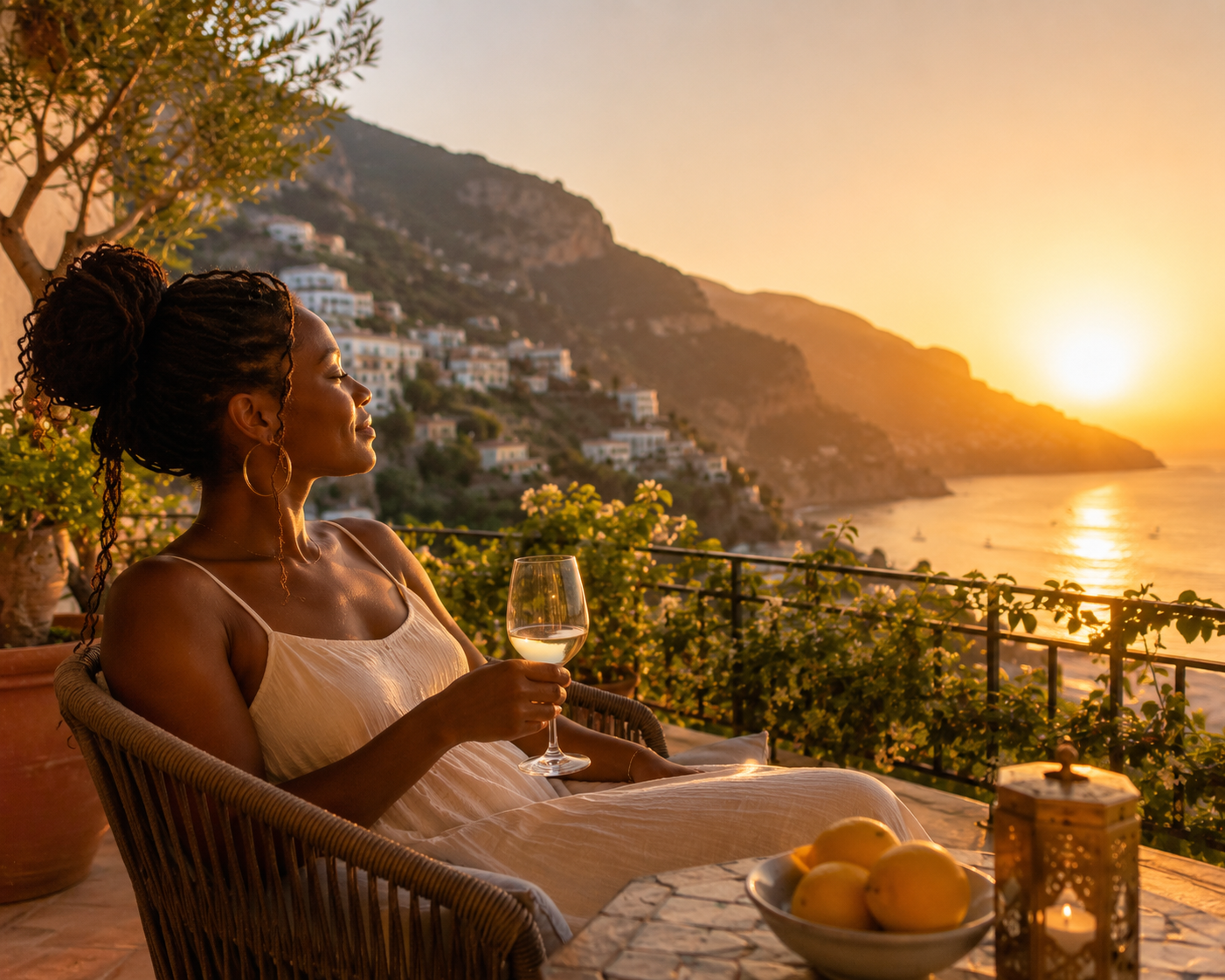
Slow travel delivers something no 5-city-in-9-days itinerary ever can — the feeling of actually having been somewhere, and the quiet certainty that you will return.
Plan your slow travel experience with free tools: AI Vacation Match Quiz · Best Time to Travel Calculator · Vacation Budget Calculator · Travel Insurance Checker · Cruise vs. All-Inclusive Comparator · Smart Packing List Generator. All 9 tools completely free at the Etravels Everywhere Travel Tool Hub.
Done Racing Through Vacations.
Ready to Actually Experience One?
I am Emoni Davis, certified travel advisor and founder of Etravels Everywhere. Slow travel is one of my specialties — and the trips I build for slow travelers are consistently the ones my clients describe as life-changing. A 20-minute conversation is all it takes to figure out where you should go, how long to stay, and what kind of experience will genuinely restore you. Your free consultation starts here.
Book My Free Slow Travel Consultation Find My Slow Travel DestinationFrequently Asked Questions: Slow Travel 2026
What Slow Travel Is and How It Works
What exactly is slow travel in 2026?
Slow travel is the practice of spending more time in fewer places — staying 7 to 14 days in a single destination rather than visiting multiple cities in rapid succession. According to Vrbo, 91% of travelers say they want slow travel in 2026 — making it the single biggest travel trend of the year. The approach prioritizes cultural immersion, local dining, walkable neighborhoods, and leaving room for spontaneous experiences rather than checking landmarks off a list. The goal is a vacation that actually restores you — rather than one that requires a recovery week afterward. Use our free Best Time to Travel Calculator to find the ideal window for your slow travel destination.
Is slow travel cheaper than regular travel?
Yes — slow travel is typically more affordable per day than fast, multi-city travel. Fewer flights mean fewer airfare costs. Extended stay vacation rentals run 30–50% below the nightly rate of short stays. Eating locally rather than at tourist-strip restaurants dramatically reduces food costs. Fewer paid excursions and more walking means lower daily activity spend. A 10-night slow travel trip to Portugal, Italy, or Bali frequently costs less total than a 6-night multi-city European rush — with a significantly more rewarding experience. Use our free Vacation Budget Calculator to compare slow travel costs against a traditional trip format.
Destinations and Planning Questions
What are the best slow travel destinations for Americans in 2026?
The top slow travel destinations for American travelers in 2026 are Italy (Tuscany and Umbria — searches for “slow travel Italy” are up 18% this year), Portugal (Lisbon and the Algarve — affordable, walkable, with digital nomad visa access), the Caribbean’s quieter islands (St. Lucia, Grenada, and Barbados for tropical slow travel), and Bali, Indonesia (the world’s leading slow travel and digital nomad hub). Domestically, Asheville NC, the Hudson Valley NY, and the Texas Hill Country all offer accessible slow travel experiences for travelers with shorter vacation windows. Furthermore, use our free Best Time to Travel Calculator to see crowd levels at any of these destinations throughout the year.
How long should a slow travel trip be?
Seven nights is the minimum to experience genuine slow travel depth in a single destination. Ten to fourteen nights is ideal for a first slow travel experience — enough time to move through the initial tourist phase, discover your neighborhood rhythm, and reach the deeper local experiences that only emerge after the first week. For travelers who want the full slow travel transformation, three to four weeks in a single destination or region is when the experience becomes genuinely life-changing. Extended stays of a month or more are increasingly supported by digital nomad visa programs in Portugal, Bali, Italy, and throughout the Caribbean.
Can I do slow travel on a cruise?
A cruise and slow travel can work beautifully together — but not in the traditional multi-port cruise format. The combination that works best is a Caribbean or Mediterranean cruise as an overview experience, followed by an extended stay at a favorite port or island. A 7-night Caribbean sailing introduces you to six islands. Returning to St. Lucia or Barbados for a 10-night villa stay afterward is pure slow travel. Additionally, river cruises — particularly those along the Rhine, Danube, or Douro — naturally incorporate slow travel principles by spending full days in single towns rather than brief port stops. Use our free Cruise vs. All-Inclusive Comparator to explore which format works best for your slow travel goals.