Free Travel Tool
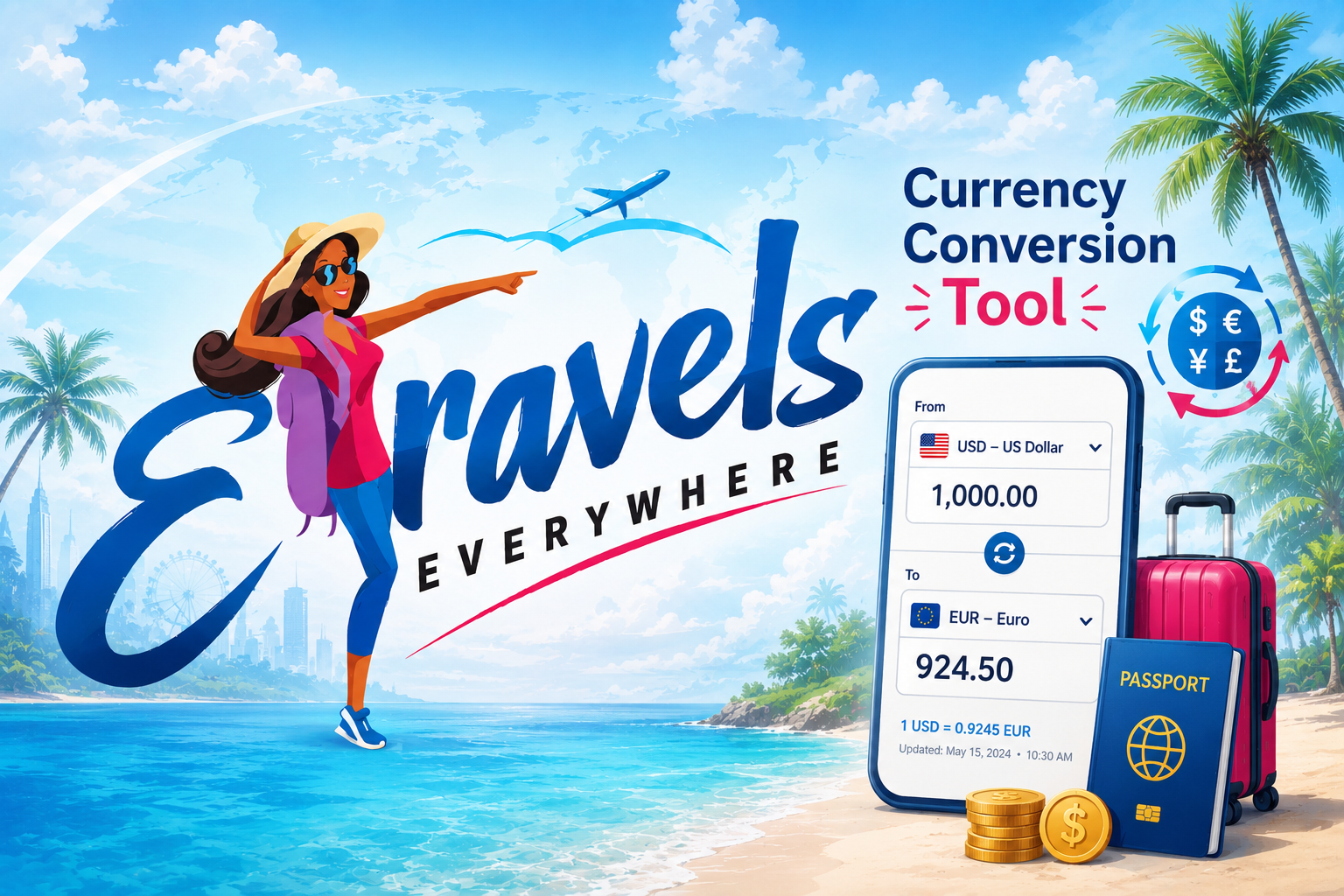
Travel Currency Converter
Knowing the exchange rate before you travel is one of the most practical things you can do to protect your vacation budget. The Travel Currency Converter gives you live exchange rates for over 150 currencies — so you always know exactly what your money is worth at your destination before you leave home.
Whether you are heading to Cancun and want to know how many Mexican Pesos your dollars will buy, planning a European cruise and budgeting in Euros, or traveling to Japan where cash is still essential — this tool updates with live market rates so your planning numbers are always accurate. In addition, checking the rate in advance helps you avoid the inflated airport exchange booth rates that can cost travelers 10 to 15 percent of their money. As a result, you arrive at your destination with a clear, realistic spending picture already in hand.
Why Exchange Rates Matter for Travel Budgeting
Airport Exchange Booths
Airport currency exchanges charge 10 to 15 percent above market rate. Knowing the real rate before you go helps you recognize a bad deal immediately.
Credit Card Fees
Most credit cards charge 3 percent foreign transaction fees on every international purchase. Cards like Chase Sapphire and Capital One Venture waive this entirely.
Cash vs. Card
Japan, Vietnam, and much of Southeast Asia still rely heavily on cash. Europe and the Caribbean widely accept cards. Knowing which to carry saves stress on arrival day.
To get started, select your currencies below and enter your travel budget. The rates update automatically from live market data every single time you convert, so your numbers are always current.
Live rates for 150+ currencies — updated from global market data. Know exactly what your money is worth before you travel.
Smart Travel Money Guide
Four Rules Every International Traveler Should Know
Best Way to Get Foreign Currency
The best exchange rates consistently come from ATMs at your destination. Use a bank ATM — not an independent machine — and choose to be charged in the local currency rather than USD to avoid dynamic currency conversion fees.
The No-Fee Credit Card Rule
Most standard credit cards charge a 3 percent foreign transaction fee on every international purchase. On a $5,000 trip that is $150 in unnecessary fees. Cards like Chase Sapphire Preferred, Capital One Venture, and Charles Schwab debit waive this entirely.
Dynamic Currency Conversion
When paying by card abroad and the terminal asks if you want to pay in your home currency or local currency — always choose local currency. The “convenience” of seeing your home currency costs you 3 to 7 percent in hidden markup.
How Much Cash to Carry
For Caribbean and Mexican all-inclusive resorts, $100 to $200 in local currency or USD covers tips, market shopping, and excursion extras. In contrast, destinations like Japan, Vietnam, and Morocco are largely cash-based — consequently, budget $50 to $100 per day in local currency for meals and activities.
When you are ready to put these numbers into a full trip budget, our Vacation Budget Calculator covers all nine cost categories for 30 destinations. Alternatively, you can book a free consultation with Emoni for personalized advice on exactly how much to bring and in which currency.
Frequently Asked Questions
How accurate are the exchange rates in this tool?
The rates are live mid-market rates sourced from global foreign exchange market data, updated in real time each time you convert. Mid-market rates are the fairest measure of currency value. The actual rate you receive from a bank, ATM, or exchange booth will be slightly lower due to their spread or fee — typically 0.5 to 3 percent. Airport exchange booths charge significantly more, often 8 to 15 percent above mid-market.
Should I exchange currency before I travel or when I arrive?
The best approach is a combination. Order a small amount of local currency from your bank before you leave — enough for day one expenses like transportation and tips. Then use ATMs at your destination for the rest, as they typically offer rates close to mid-market. Avoid exchanging large amounts at airport booths, hotel desks, or tourist-area exchange kiosks, which all charge premium rates.
Do I need local currency for a Caribbean all-inclusive resort?
For most Caribbean all-inclusive resorts, US dollars and credit cards cover everything inside the resort. However, carrying $100 to $200 in local currency is useful for tips to local staff (who often prefer local currency), shopping at local markets off-resort, excursion gratuities, and transportation. Aruba and the Bahamas accept USD almost universally. Jamaica and the Dominican Republic have their own currencies that you will need for anything outside the resort gates.
Which currencies should I know before a cruise?
On a cruise, your onboard account is in US dollars and all ship purchases go on your room card. For ports of call, the key is knowing the local currency for each island or country you visit. Caribbean ports typically accept USD. European cruise ports require Euros. Use this converter before your sailing date to check the rate for each port on your itinerary so you know exactly how much cash to carry ashore.
Can Etravels Everywhere help me budget for international travel?
Yes — travel budget guidance is part of every trip we plan. When you book a consultation, Emoni walks you through realistic daily spending budgets for your destination, which currency you will need and how much to carry, the best way to access money at your specific destination, and how to protect your budget with the right travel insurance policy.