Mexico City Travel Guide 2026: What to Know Before You Go
Mexico City is one of the world’s great cities — a metropolis of 21 million people, 170 museums, the finest food scene in Latin America, and neighborhoods so alive that visitors consistently describe it as the trip that changed how they thought about travel.
This Mexico City travel guide for 2026 is the one that gives you what matters — the neighborhoods, the food, the safety reality, the day trips, and the intelligence to move through one of the world’s most extraordinary cities with genuine confidence. Google reported that searches for “best restaurants in Mexico City” reached a 10-year high in 2026 — meaning more people are discovering CDMX right now than at any point in a decade. Use our free AI Vacation Match Quiz to see what to expect in CDMX. Build your budget with the Vacation Budget Calculator. Protect your trip with the Travel Insurance Checker. All tools completely free at the Etravels Everywhere Travel Tool Hub. Book a free Mexico City trip consultation here.
Mexico City is impossible to sum up in a single word. Home to more than 21 million people, it holds more museums than almost any city on earth, the most exciting food scene in Latin America, world-class art collections in stunning modern buildings, and neighborhood streets so beautiful and alive that visitors consistently describe it as the trip that rewired how they think about cities. This Mexico City travel guide for 2026 gives you the framework to experience it correctly — starting with the most important decision: where to stay.
Mexico City Travel Guide 2026: Why CDMX Is at a 10-Year Search High
The City That Keeps Surprising Everyone Who Goes
Mexico City consistently does something that very few destinations can — it exceeds expectations for travelers who arrive with high ones. According to Mexico Travel and Leisure’s 2026 guide, Roma Norte and Condesa feature tree-lined boulevards, Art Nouveau and Art Deco architecture, and a density of restaurants, cafés, and galleries that rivals any neighborhood in Latin America. Additionally, the Polanco district — CDMX’s most affluent quarter — hosts luxury hotels including the Four Seasons, St. Regis, and W Hotel. World-class restaurants Pujol and Quintonil, which consistently rank among the top 50 restaurants on earth, are both located here as well.
The 10-year search high for Mexico City in 2026 reflects something real: a generation of travelers has discovered that CDMX delivers the cultural depth of a European capital, the food scene of Tokyo, and the neighborhood life of Latin America’s most vibrant city — at a price point that makes Paris and Rome look expensive. Consequently, the question is no longer whether Mexico City is worth visiting. The question is how to visit it intelligently. This guide answers that question precisely.
“Mexico City, home to more than 21 million people, is impossible to sum up in a single word. Alongside sprawling neighborhoods and heavy traffic, you’ll find some of the country’s finest restaurants, incredible street food, outstanding museums, and the most charming local areas.”
— Northabroad · Mexico City Travel Guide, April 2026Mexico City Travel Guide 2026: Where to Stay — Neighborhoods Explained
The Neighborhood Decision That Defines Your Entire Trip
Where you stay in Mexico City dramatically shapes your experience. According to A Couple Travelers’ 2026 first-timer guide, Condesa and Roma are the top neighborhoods for first-timers — leafy, safe, and packed with trendy cafés, boutiques, and restaurants. The choice between Roma Norte and Condesa is one of CDMX’s great traveler debates, and the answer depends entirely on what kind of trip you are building.
Roma Norte — Best for Foodies and First-Timers
Default Recommendation · Best Food Access · Most Walkable
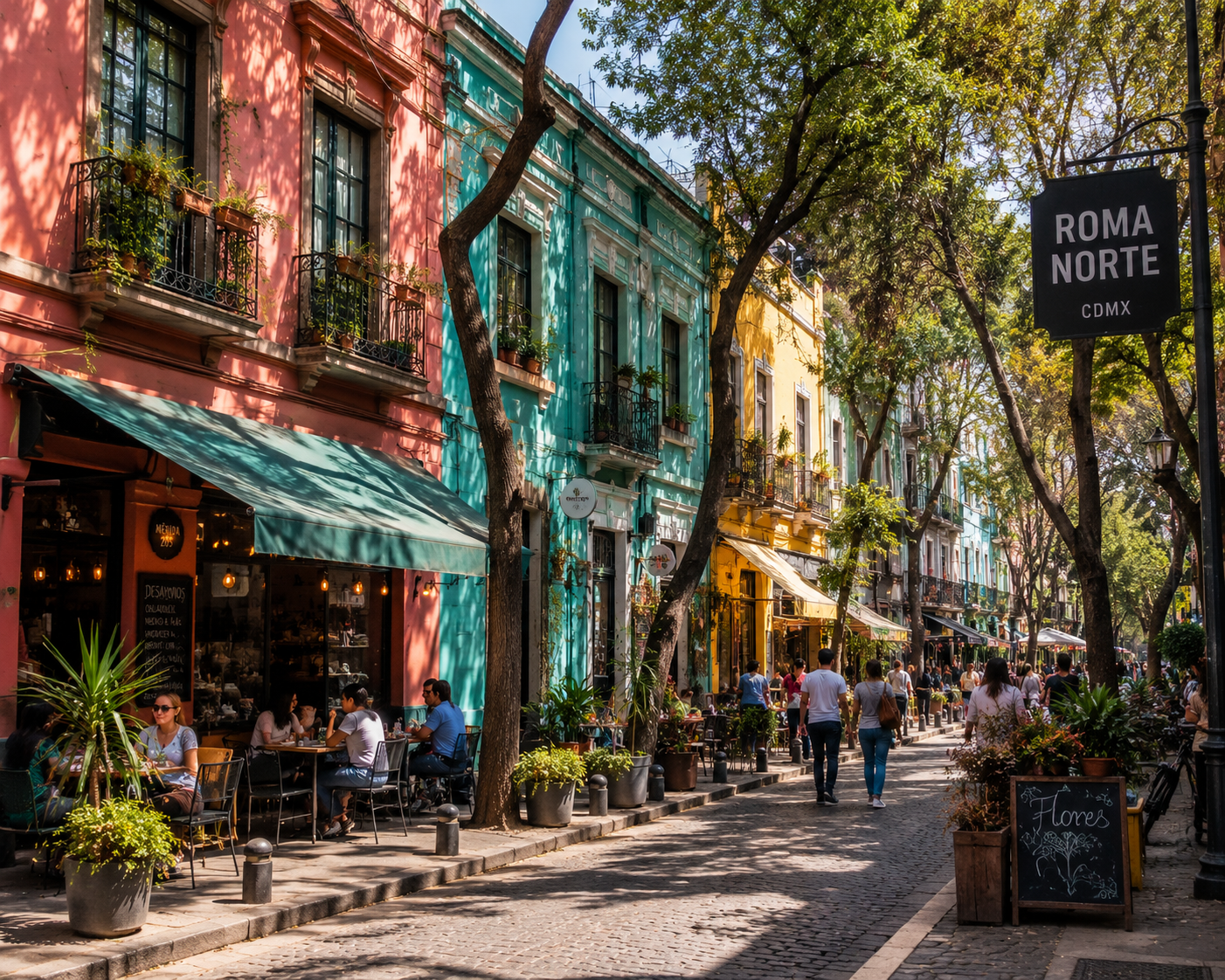
According to Mexico Travel and Leisure’s neighborhood guide, Roma Norte is the default recommendation for first-time visitors. It suits foodies, solo travelers, couples, and digital nomads equally well. The neighborhood trends artier and more independent — the best natural wine bars, the strongest concentration of design stores, and a restaurant-per-block density that rivals any neighborhood in the world. Furthermore, Álvaro Obregón Boulevard provides a pedestrian-friendly main strip lined with restaurants and bars. It fills with families and couples on weekend evenings. Orizaba Street is also worth noting — famous for its colorful facades, it is home to Buna coffee and Almanegra, consistently rated among CDMX’s finest specialty coffee experiences.
Legendary restaurants in Roma Norte include Contramar for seafood, Lardo for Mediterranean, and Rosetta for Italian-Mexican fusion. Moreover, Plaza Rio de Janeiro — the neighborhood’s central plaza — is one of the city’s best afternoon sitting spots. A copy of Michelangelo’s David stands in a fountain surrounded by beautiful buildings. Roma Norte is the neighborhood you book when the trip is primarily about eating, walking, and discovering things that were not on any list.
Condesa, Polanco, and Coyoacán — More Neighborhood Options
La Condesa — Best for Longer Stays and a Relaxed Rhythm
Most Residential · Park Life · Expat Rhythm · Slightly Quieter
Condesa is Roma Norte’s slightly more residential, family-friendly counterpart. It centers around Parque México and Parque España — genuinely beautiful urban parks that define the neighborhood’s daily rhythm. According to Get Lost in Mexico City’s neighborhood analysis, Condesa suits travelers coming for longer stays who want the expat rhythm — parks, cafés, and weekend vibes. The distinctive oval-shaped Ámsterdam Avenue once served as a horse-racing track. Today, it is a popular running and walking route that circles Parque México. Additionally, Condesa’s Art Deco architecture along its wide, tree-lined boulevards makes simply walking the streets a visual experience.
Polanco — Best for Luxury Travelers and Museum Visitors
Most Affluent · World-Class Restaurants · Free Museums
Polanco is CDMX’s most affluent district. It is home to luxury hotels, designer boutiques along Avenida Presidente Masaryk — called the Mexican Rodeo Drive — and the world-class Museo Soumaya. The museum sits inside a striking silver building funded by billionaire Carlos Slim. Admission is completely free, and it houses 66,000 pieces including the largest Auguste Rodin sculpture collection outside France. Furthermore, Pujol and Quintonil — two of the most celebrated restaurants in Latin America — are both located in Polanco and regularly appear in the World’s 50 Best Restaurants list. Consequently, for travelers who prioritize luxury accommodation, museum access, and fine dining, Polanco is the correct base.
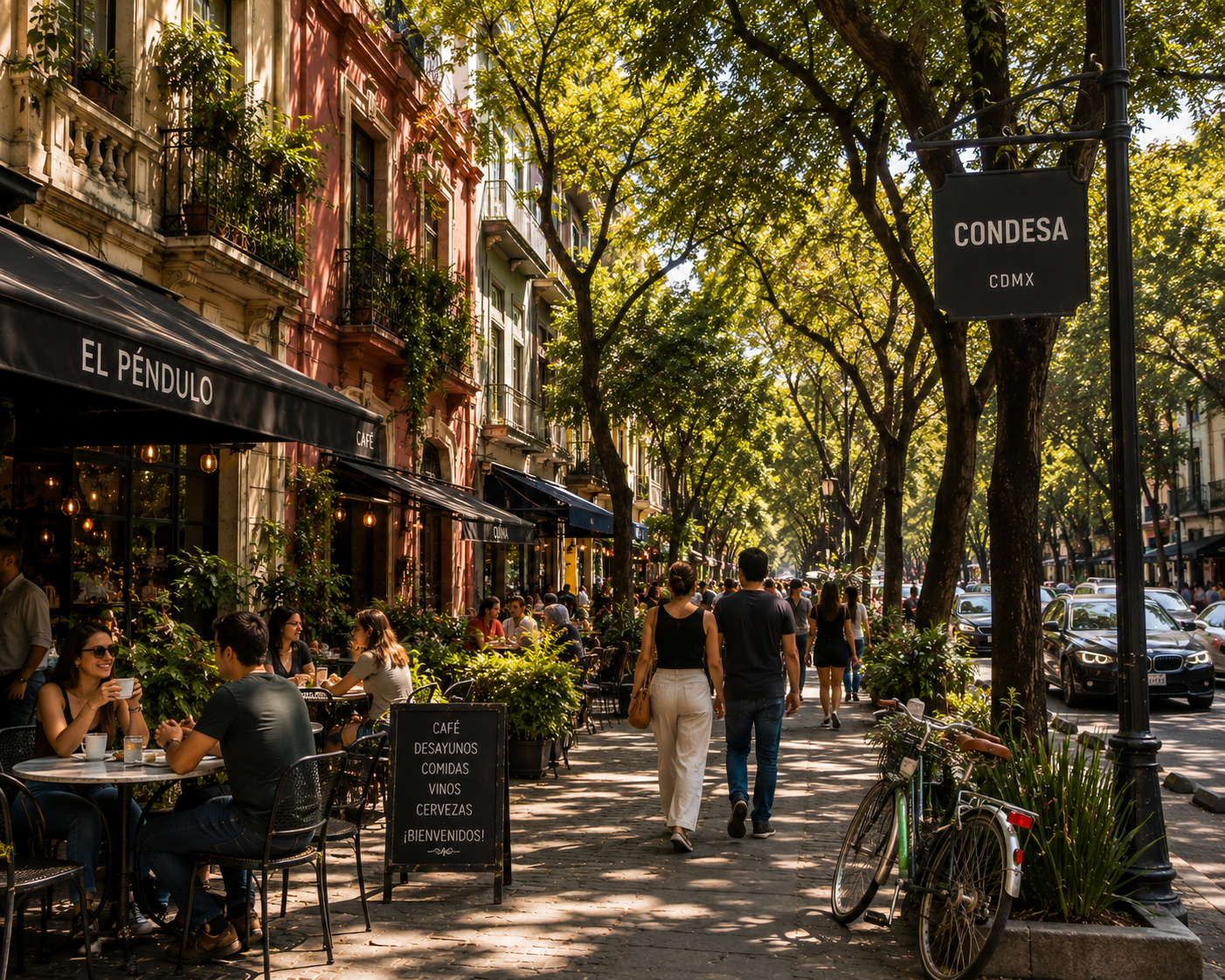
Roma Norte and Condesa are Mexico City’s most compelling neighborhoods for travelers — leafy, safe, extraordinarily walkable, and packed with cafés, restaurants, and design stores that reward hours of aimless exploration.
Mexico City Travel Guide 2026: The Food Scene
Why CDMX Is the Greatest Food City in Latin America
Food is the primary reason most first-time Mexico City visitors become repeat visitors. According to Mexico Travel and Leisure’s 2026 food guide, CDMX draws people from every Mexican state, and they bring their food — creating a concentration of regional Mexican cuisine unmatched anywhere else in the country. Furthermore, the city’s food culture operates across every price level simultaneously — from $2 street tacos that are objectively excellent to $200 tasting menus at Pujol that are objectively extraordinary.
Street Tacos
Al Pastor — Everywhere, Roma Norte BestMexico City’s al pastor tacos — pork marinated in achiote and spices, cooked on a vertical spit, carved fresh onto a warm corn tortilla with pineapple — are among the most delicious things you will eat anywhere on earth. The correct strategy: eat from busy stalls with high turnover, always at midday or evening, always standing.
Comida Corrida
Daily Set Menu — Neighborhood FondasEvery neighborhood has fondas — small family-run spots serving a daily changing set menu for 80 to 150 Mexican pesos. Soup, rice, a main guisado (stew), beans, agua fresca. Look for hand-written menus on chalkboards. Ask what the guisado is today — that is the meal. This is how most of Mexico City eats lunch.
Mercado San Juan
Centro Histórico · Best Gourmet MarketMercado San Juan is CDMX’s gourmet market — international cheeses, Japanese ingredients, Spanish jamón, fresh seafood, truffle products, and artisanal Mexican food all in one market. The surrounding stalls serve excellent prepared food at market pricing. Go between 10 AM and 1 PM for the best selection and fewest crowds.
Cantina Culture
La Ópera Bar — Centro HistóricoTraditional cantinas serve free botanas (snacks) with drinks — one of the genuinely unique social experiences in CDMX. La Ópera Bar in Centro Histórico has a bullet hole from Pancho Villa’s revolver still visible in the ceiling. Salón Corona and Tío Pepe are also worth visiting. Go at 2 PM when the post-lunch crowd fills them.
Fine Dining and Street Food Experiences Worth Planning Around
Pujol
Polanco · World’s Top 20 RestaurantChef Enrique Olvera’s flagship restaurant consistently ranks in the World’s 50 Best Restaurants. The Mole Madre — a mole aged on the same plate for over 1,000 days — is one of the most famous individual dishes in fine dining. Book 30 to 60 days in advance. The omakase taco bar is the more accessible option.
Tamales de Elote
Street Vendors · Morning OnlyFresh corn tamales sold by street vendors from large pots in the early morning — one of Mexico City’s most distinctly local breakfast experiences. Sweet corn masa, steamed in corn husks, served with an atole (warm masa drink). Available before 10 AM from vendors who set up outside metro stations and on residential corners.
Mexico City Travel Guide 2026: Must-See Attractions
The Experiences That Define a CDMX Trip
Teotihuacan Pyramids — The Non-Negotiable Day Trip
50 km from CDMX · UNESCO World Heritage Site · Book Tour in Advance
Teotihuacan is the most important pre-Columbian site in Mexico. It is also one of the most significant archaeological sites in the Western Hemisphere. The Pyramid of the Sun — the third-largest pyramid on earth — rises 70 meters above the surrounding plain. The Avenue of the Dead stretches over two kilometers between temple complexes built when Rome was still a republic. Furthermore, standing at the summit of the Pyramid of the Moon and looking down the full length of the avenue is genuinely overwhelming — regardless of prior interest in archaeology. According to Travels Break’s Mexico City guide, Teotihuacan is the top-ranked day trip from CDMX. Book a guided tour departing at 7 AM — arriving before the crowds transforms the experience completely.
Cultural Attractions Inside Mexico City
Frida Kahlo Museum (Casa Azul) — Book Online Before You Arrive
Coyoacán · Most Popular Cultural Attraction · No Walk-In Tickets
The Frida Kahlo Museum is Mexico City’s most popular cultural attraction. It is housed in the cobalt-blue Casa Azul where Kahlo was born and died. The official museum website confirms there are no in-person ticket sales — all tickets must be booked online before visiting. The museum displays Kahlo’s personal collection, her studio, and the house itself — preserved as she left it. Artifacts include pre-Columbian pieces, her famous four-poster bed with mirror above, and the wheelchair she used in her final years. Moreover, the surrounding Coyoacán neighborhood — colonial cobblestone streets, bohemian plazas, and the market where Kahlo and Rivera bought ingredients — is worth a full afternoon of wandering after the museum visit.
Museo Soumaya — The Free World-Class Museum Nobody Queues For
Polanco · Free Admission · 66,000 Works · Rodin + European Masters
The Museo Soumaya is one of the world’s great free museums — housed in a striking curved silver building designed by Fernando Romero, containing 66,000 works spanning 30 centuries. The collection includes the largest Rodin sculpture collection outside France, European Old Masters, pre-Columbian artifacts, and one of the world’s most important collections of Mesoamerican gold. Furthermore, the building itself is an architectural landmark — photographed from every angle by visitors who have not yet gone inside, and then forgotten about by those who have, because the interior is genuinely more interesting than the exterior. Plan two hours minimum. Admission is completely free.
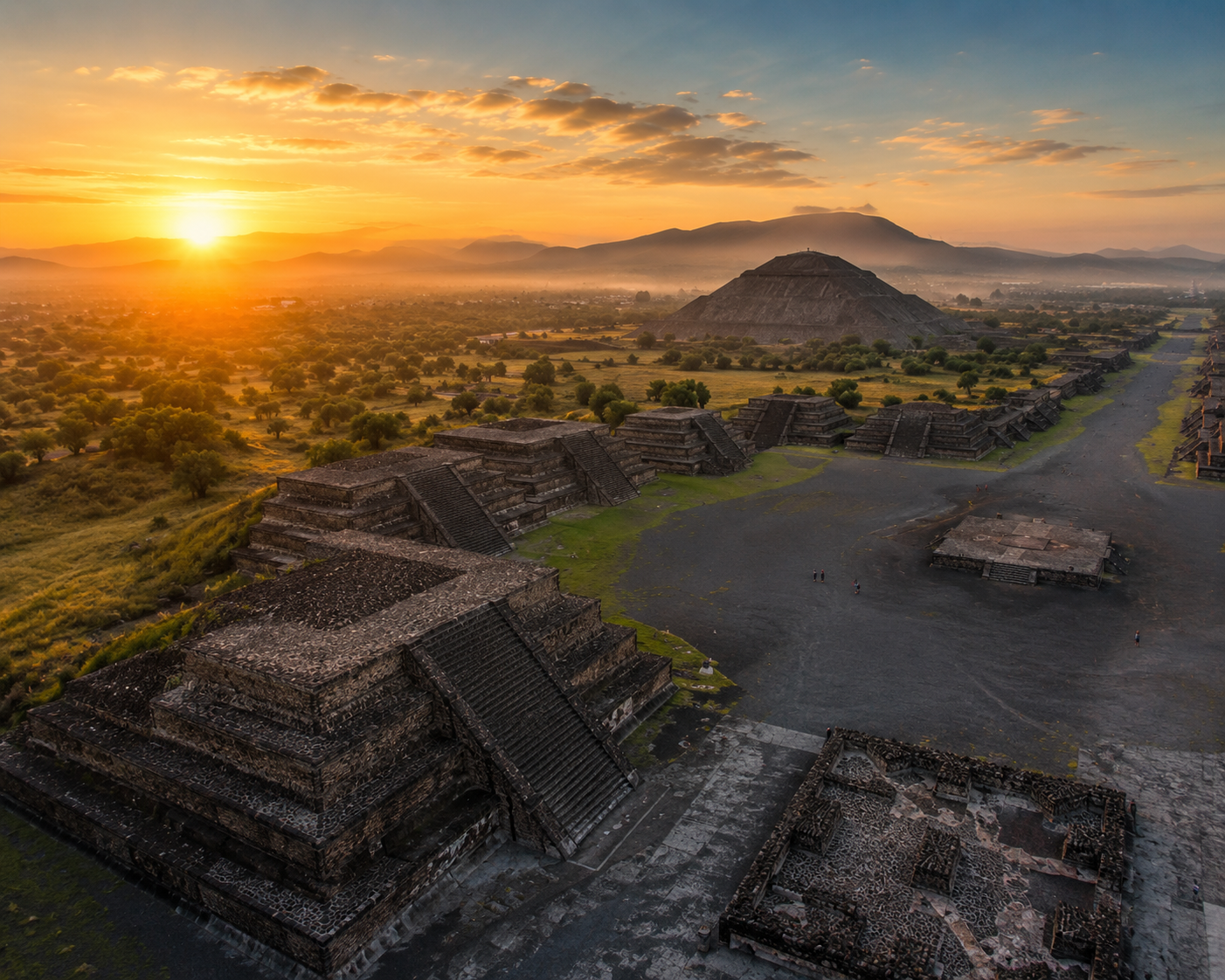
The Teotihuacan Pyramids at sunrise — arriving before the crowds transforms this ancient site from a tourist attraction into one of the most powerful experiences available in Mexico.
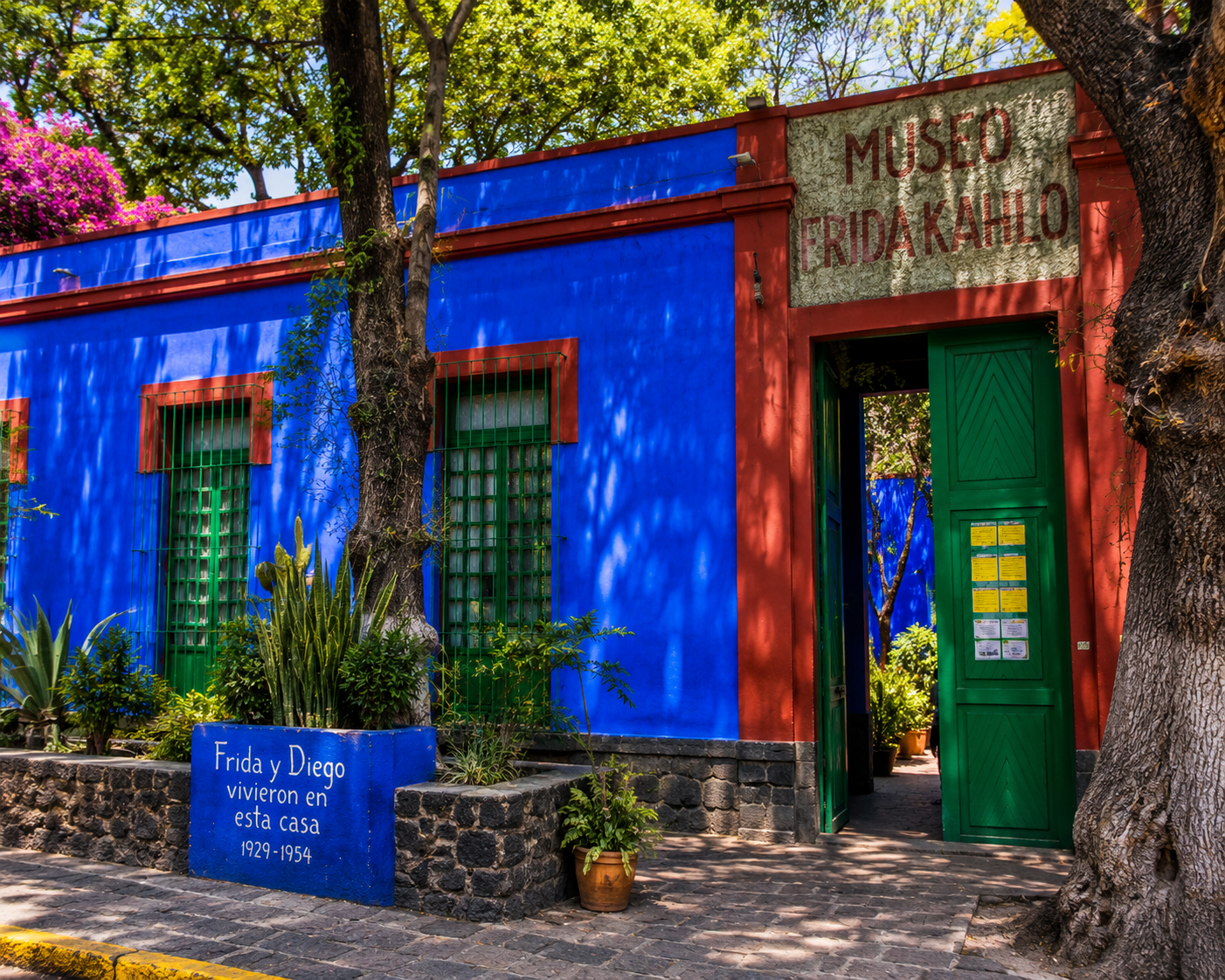
Casa Azul — the cobalt-blue home where Frida Kahlo was born and died — is Mexico City’s most popular cultural attraction. All tickets must be booked online before visiting; there are no walk-in sales.
Mexico City Travel Guide 2026: Day Trips Worth the Journey
The Best Day Trips from CDMX in 2026
Puebla — Mole Birthplace and Baroque Architecture
Puebla is two hours from Mexico City by first-class bus. It delivers one of Mexico’s richest city experiences. As the birthplace of mole poblano, it anchors one of the world’s great regional food cultures. Furthermore, Puebla’s historic center is a UNESCO World Heritage Site — staggering baroque architecture, hand-painted Talavera ceramic tiles on every building surface, and a food scene that challenges CDMX for regional Mexican excellence. The Amparo Museum houses one of Mexico’s finest pre-Columbian collections. Additionally, a stop at the Cholula pyramid pairs naturally with a Puebla day trip — a colonial church sits directly on top of the largest pyramid by volume in the world.
Shorter Day Trips Ideal for Afternoon Escapes
Tepoztlán — The Magical Town on the Mountain
Tepoztlán is a pueblo mágico — one of Mexico’s officially designated “magical towns” — nestled in a valley surrounded by dramatic volcanic cliffs. The town’s weekend artisan market and local food scene attract a mix of Mexico City weekenders and international visitors. The hike to the pre-Columbian Tepozteco pyramid above the town — 400 meters of steep stone steps — delivers views of the entire valley that reward the climb unambiguously. Furthermore, the town’s mezcal bars, organic restaurants, and holistic retreat culture make it the most complete single-day Mexico City escape available.
Xochimilco — The Ancient Floating Gardens
Xochimilco’s network of ancient canals — remnants of the Aztec chinampas agricultural system that once covered the entire Valley of Mexico — is one of Mexico City’s most unique UNESCO World Heritage experiences. Brightly painted trajineras (flat-bottomed boats) carry groups through the canal network while floating food vendors, marimba musicians, and flower sellers pull alongside. The experience is festive, genuinely local, and completely unlike anything else available in or around the city. Go on a Saturday or Sunday for the full cultural immersion.
Mexico City Travel Guide 2026: Safety, Practical Tips, and What to Know
The Safety Reality — Honest and Specific
Mexico City’s safety reality is more nuanced than either extreme — neither the danger narrative nor the “it’s totally fine” dismissal — serves travelers well. According to A Couple Travelers’ first-timer guide, booking accommodations in safe neighborhoods is the single most important safety decision. Roma Norte, Condesa, Polanco, and Coyoacán are genuinely comfortable neighborhoods where independent movement day and evening is safe for most travelers. The Centro Histórico is excellent for daytime sightseeing but requires more caution after dark. Furthermore, Get Lost in Mexico City’s neighborhood guide is direct: most of the CDMX neighborhood guide focuses on places that are safe to explore independently — where you can wander, café-hop, and spend a full afternoon outside without feeling on edge.
Practical Mexico City Tips — Before You Go
Use Uber for all transportation longer than 15 minutes. It is affordable, GPS-tracked, and significantly safer than hailing street taxis. Walking, meanwhile, is the best way to explore Roma Norte, Condesa, and Polanco — the neighborhoods are specifically designed for pedestrian life. Do not underestimate the size of the city. Traffic can be extremely slow, so group attractions by neighborhood rather than crossing the city multiple times in a day.
Furthermore, altitude matters more than most travelers expect. Mexico City sits at 2,240 meters above sea level. Consequently, mild altitude sickness — headache, fatigue, breathlessness — affects some visitors for the first 24 to 48 hours. Hydrate aggressively upon arrival and avoid alcohol on the first evening. Additionally, stick to bottled water throughout — tap water is not safe to drink for visitors without built-up local tolerance. Use the free Smart Packing List Generator to prepare all documentation before your Mexico City departure.
Mexico City is the destination I recommend most often to travelers who feel like they have already been everywhere and are looking for something that genuinely surprises them. It does. Every single time. The food alone is worth the flight — but it is the neighborhoods, the museums, the energy of a city that feels completely alive at every hour of the day and night that makes people come back. If you are planning a Mexico City trip and want help building an itinerary that goes beyond the obvious, I would love that conversation. Book a free consultation here.
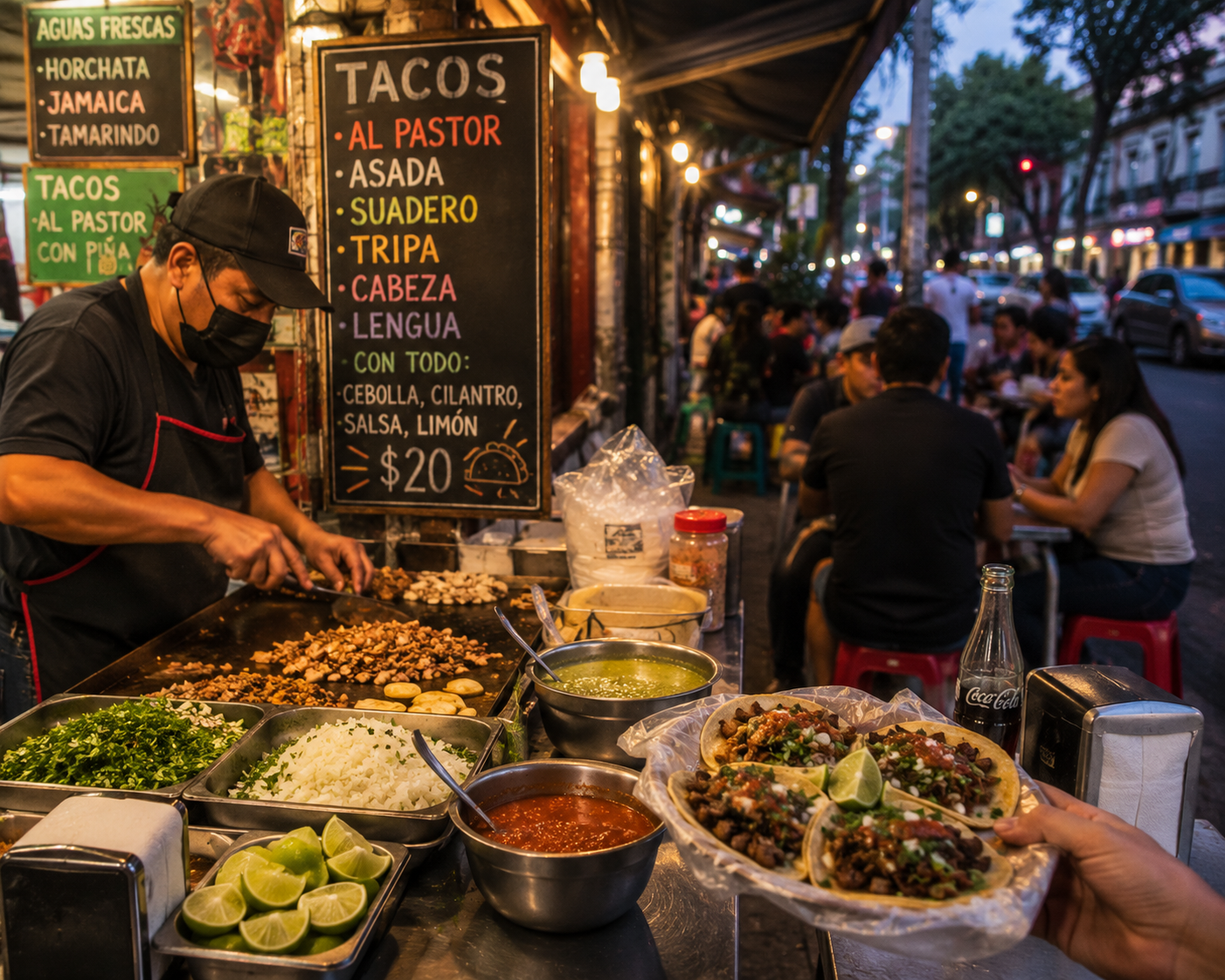
Mexico City’s food scene — from $2 street tacos to world-class tasting menus — has made it the most searched food destination in Latin America in 2026, and the experience on the ground exceeds every search result.
Plan your Mexico City trip with free tools: AI Vacation Match Quiz · Best Time to Travel Calculator · Vacation Budget Calculator · Travel Insurance Checker · Smart Packing List Generator. All 9 tools completely free at the Etravels Everywhere Travel Tool Hub.
Mexico City Is One of the World’s Great Trips.
Let’s Build Yours the Right Way.
I am Emoni Davis, certified travel advisor and founder of Etravels Everywhere. Mexico City paired with a Riviera Maya resort extension — or a Mexico City land trip combined with a Caribbean cruise departure — is one of the most compelling travel packages available to American travelers in 2026. Your free 20-minute consultation is where we figure out which version is right for you.
Book My Free Mexico City Consultation Find My Best Travel WindowFrequently Asked Questions: Mexico City Travel Guide 2026
Planning and Neighborhood Questions
Is Mexico City safe to visit in 2026?
Mexico City is safe for travelers who stay in the right neighborhoods and follow standard urban travel practices. Roma Norte, Condesa, Polanco, and Coyoacán are genuinely comfortable neighborhoods where independent daytime and evening movement is appropriate for most international travelers. The Centro Histórico is excellent for daytime sightseeing but requires more caution after dark. Use Uber for all transportation, stay in vetted neighborhoods, book restaurant reservations in advance for popular spots, and avoid walking alone late at night in unfamiliar areas. The U.S. State Department maintains a Level 2 advisory for Mexico City — advising increased caution, which is the same level applied to many European cities. Use our free Smart Packing List Generator to prepare fully before departure.
What is the best neighborhood to stay in Mexico City for first-timers?
Roma Norte is the default recommendation for first-time Mexico City visitors who want the best food access, walkable streets, and a lively, safe atmosphere. Condesa is the alternative for travelers who prefer parks, a more relaxed pace, and a slightly more residential feel. Polanco is the correct choice for luxury hotel travelers and those prioritizing museum access. According to Mexico Travel and Leisure’s neighborhood guide, Roma Norte is ideal for foodies, solo travelers, couples, and digital nomads, while Condesa suits longer stays and an expat-friendly rhythm. Both Roma Norte and Condesa are within 15 minutes of each other on foot — making it simple to experience both regardless of where you base yourself.
Food and Practical Questions
How much does a trip to Mexico City cost in 2026?
Mexico City offers extraordinary value for American travelers. Daily food costs range from $15 to $30 per person for street food, market meals, and casual restaurants — rising to $80 to $200 for high-end dining at places like Pujol or Quintonil. Quality boutique hotels in Roma Norte and Condesa run $80 to $200 per night. Luxury hotels in Polanco run $300 to $600 per night. Uber rides within the tourist neighborhoods average $3 to $8. The Museo Soumaya is completely free. Teotihuacan day trips with guided tour run $40 to $80 per person. A well-planned five-day Mexico City trip for two travelers typically costs $1,500 to $3,500 all-in including flights, which are frequently available from U.S. gateway cities for $200 to $400 round-trip. Use our free Vacation Budget Calculator for a personalized estimate.
How many days do you need in Mexico City?
Three days is enough for a well-structured first visit — covering the Zócalo and Centro Histórico, the Frida Kahlo Museum in Coyoacán, a full day in Roma Norte and Condesa, and the Museo Soumaya in Polanco. Five to seven days allows for a Teotihuacan day trip, a Puebla day trip, deeper neighborhood exploration, and the kind of leisurely pace that lets the city reveal itself rather than being consumed in a sprint. Experienced Mexico City travelers consistently recommend five days as the minimum for a trip that feels genuinely satisfying rather than merely checked off. Book a free consultation to build a perfectly paced Mexico City itinerary.