Warning: Summer 2026 Travel Will Never Be the Same — The Surprising World Cup Effect Nobody Warned You About
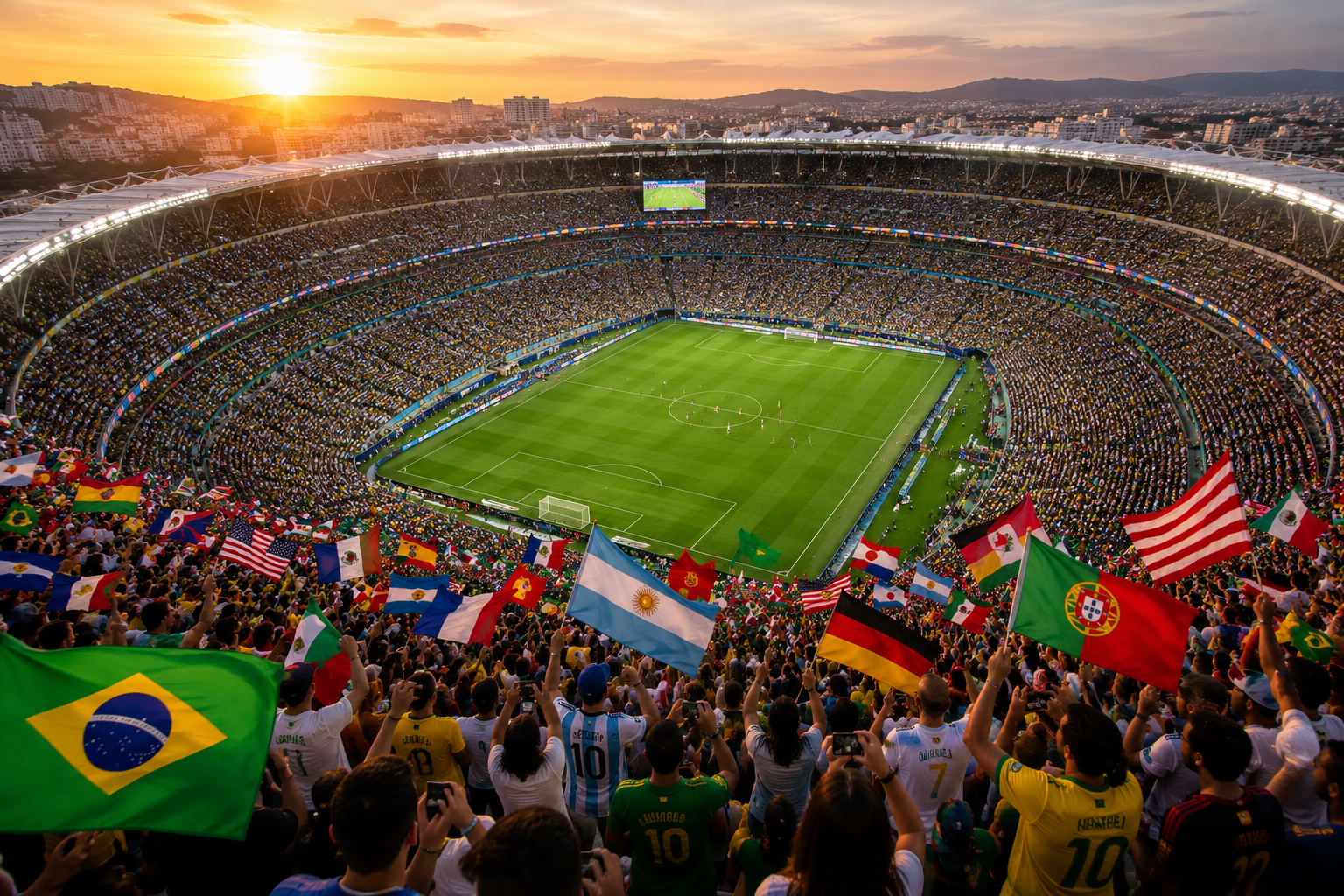
The 2026 FIFA World Cup begins June 11 across 16 host cities in the U.S., Canada, and Mexico — the largest sporting event in human history, and the biggest travel disruption American cities have ever experienced.
The World Cup 2026 travel guide you need is this one — written on May 29, 2026, with the tournament starting in 13 days, and hotels in host cities already priced at 30 to 300 percent above normal summer rates. Whether you are attending matches, traveling through host cities, or simply planning summer travel that overlaps with the tournament, this guide gives you the exact intelligence to navigate it confidently. Use our free Destination Crowd Checker to see what to expect in specific host cities. Build your full trip budget with the Vacation Budget Calculator. Protect every booking with the Travel Insurance Checker. All tools are completely free at the Etravels Everywhere Travel Tool Hub. Book a free travel consultation here.
The 2026 FIFA World Cup is the largest sporting event in human history — 48 teams, 104 matches, 16 host cities across three countries, running from June 11 through July 19, 2026. For American travelers, this is not just a sporting event. It is a 39-day transformation of 11 U.S. cities into the most concentrated international travel environment any of them have ever experienced. This World Cup 2026 travel guide tells you what is actually happening, which cities are affected, and exactly how to travel smarter through it all.
The 2026 FIFA World Cup begins June 11, 2026 — 13 days from today. Hotel prices in host cities are already 30 to 300 percent above normal summer rates. An estimated 1.2 million international visitors will arrive in the U.S. for the tournament. If any part of your summer travel touches a host city, read this guide before you book anything else.
World Cup 2026 Travel Guide: The 11 U.S. Host Cities Explained
What Each Host City Means for Travelers This Summer
Understanding which cities are hosting matches — and how many — is the first step in navigating summer 2026 travel. According to WideJournal’s World Cup travel guide, each host city differs significantly in costs, climate, and transportation options. The key insight for non-attending travelers is simple: if your summer itinerary touches any of these 11 cities between June 11 and July 19, book your hotels and flights immediately — or plan around the matches entirely.
New York / New Jersey — MetLife Stadium
Final Host City · Peak Demand · Most Expensive Market
New York and New Jersey host the most matches of any U.S. city — including the World Cup Final on July 19. Consequently, the New York metro area will experience the most extreme pricing and congestion of the entire tournament. According to Goal.com’s hotel analysis, hotel prices near stadiums in New York are already pricing match-night rooms at 15 to 20 times their normal summer rates. Downtown Manhattan hotels are essentially sold out for Final weekend. Furthermore, SmartSMS Solutions’ World Cup travel guide recommends using Amtrak on the Northeast Corridor — New York to Philadelphia to Washington D.C. is faster and cheaper by train once you factor in airport time and domestic airfare surges.
Los Angeles — SoFi Stadium
Semi-Final Host · 2nd Most Expensive · Hollywood + World Cup
Los Angeles hosts a semifinal and multiple group stage matches — making it the second most expensive host city for summer 2026 travel. Hotel prices near SoFi Stadium in Inglewood are elevated significantly above normal LA summer rates, and Inglewood-area hotels are booking out fastest. Moreover, the combination of World Cup crowds with LA’s existing summer tourism season creates a compression effect that pushes prices across the entire metro area upward. Travelers with planned LA visits in June or July should book now with refundable rates — allowing cancellation if match schedules conflict or if closer options open up as the tournament progresses.
Dallas — AT&T Stadium, Arlington
Multiple Group Stage Matches · Extreme Heat Warning · Best Hotel Value
Dallas offers more mid-range hotel options than most U.S. host cities — making it one of the better value markets for World Cup 2026 travel. However, WideJournal’s city-by-city analysis issues a clear warning: North Texas summer temperatures regularly top 100 degrees Fahrenheit, creating a serious physical challenge for outdoor pre-game activities. Travelers visiting Dallas during the tournament should plan indoor activities for daytime hours, hydrate aggressively, and choose hotels with strong air conditioning infrastructure. Additionally, the Dallas-Fort Worth airport remains one of the busiest connecting hubs in North America — World Cup traffic will add significant congestion to an already busy summer schedule.
Miami — Hard Rock Stadium
Multiple Matches · Humidity Warning · Beach + World Cup Combo
Miami hosts multiple group stage matches, including high-profile matchups between South American nations whose fans travel in legendary numbers. The combination of World Cup visitors with Miami’s existing June-July tourist base — plus the intense humidity of Florida summer — creates a uniquely challenging travel environment. Furthermore, Miami serves as a major international gateway, meaning flight connections through Miami will experience significant disruption on match days. For travelers who want to experience the World Cup atmosphere without attending matches, Miami’s Fan Festival provides free access to live match screenings with the full tournament atmosphere at no ticket cost.

The 2026 FIFA World Cup will bring 1.2 million international visitors to U.S. host cities — creating an atmosphere of global celebration unlike anything American cities have experienced before.
World Cup 2026 Travel Guide: Hotel and Flight Reality Check
The Honest Numbers Every Traveler Needs to See
The most important intelligence in this World Cup 2026 travel guide is the pricing reality — because most travelers do not understand how dramatically the tournament has already distorted summer 2026 hotel and flight markets in host cities.
| Host City | Hotel Premium | Worst Match Dates | Alternative Strategy |
|---|---|---|---|
| New York / NJ | 15–20x match nights | July 19 Final | Stay in Brooklyn or Hoboken |
| Los Angeles | 3–5x normal rates | Semifinal dates | Book Pasadena or Long Beach |
| Dallas | 1.5–2.5x normal | Group stage dates | Best value — book now |
| Miami | 2–4x normal rates | South American matchups | Fort Lauderdale alternative |
| Seattle | 2–3x normal rates | Group stage dates | Bellevue or Redmond area |
| San Francisco | 3–5x normal rates | Multiple matches | Oakland or San Jose |
| Boston | 2–3x normal rates | Group stage dates | Cambridge or Newton |
| Atlanta | 1.5–2x normal | Group stage dates | Accessible from Buckhead |
| Houston | 1.5–2.5x normal | Group stage dates | The Woodlands area |
| Philadelphia | 2–3x normal rates | Group stage dates | King of Prussia area |
| Kansas City | 1.5–2x normal | Group stage dates | Best overall host city value |
Flights Through Host Cities — What to Expect
Even if you are not attending a World Cup match, your summer travel may be significantly affected if your routing passes through host city airports. International arrivals are projected to spike dramatically at JFK, LAX, MIA, and SFO throughout June and July. Consequently, travelers with connections through these airports should build extra buffer time — a standard 90-minute domestic connection through JFK during World Cup peak weeks is genuinely risky. Furthermore, domestic flights to host cities on match days will price surge with demand. According to Travel and Tour World’s World Cup handbook, even a refundable booking is better than watching fares double — lock in flights now and adjust later if needed.
World Cup 2026 Travel Guide: The Smart Traveler’s Action Plan
What to Do Right Now — In Priority Order
Check Every Leg of Your Summer Travel Against the Match Schedule
Before booking any summer travel, cross-reference your dates and cities against the full FIFA World Cup 2026 match schedule. The official schedule is available at FIFA.com. Any date in any of the 11 U.S. host cities between June 11 and July 19 carries premium pricing risk. Moreover, cities within driving distance of host stadiums — Fort Lauderdale near Miami, Oakland near San Francisco — also experience elevated pricing on match days even without hosting matches themselves.
Book Refundable Hotel Rates Immediately — Even if Plans Are Uncertain
The single most important World Cup 2026 travel decision is booking refundable hotel rates right now. According to SmartSMS Solutions, hotel prices will only increase as June approaches. A refundable reservation costs nothing to hold and can be cancelled later. Waiting means either paying significantly more for the same room or finding it sold out entirely. Aim to have all major summer hotel reservations locked in with refundable options as soon as possible.
Consider Staying Outside the Host City Core
Downtown hotel options and those close to stadiums are already scarce in some host cities. Broadening the search to suburban areas — Hoboken and Brooklyn near MetLife Stadium, Fort Lauderdale near Miami, Bellevue near Seattle — frequently provides quality accommodation at 40 to 60 percent lower rates while adding only 20 to 40 minutes of commute time. Additionally, this strategy protects against the neighborhood congestion that surrounds stadiums on match days, which can make even short travel times extremely stressful.
Consider Avoiding Host Cities Entirely and Taking a Vacation Instead
This is the World Cup 2026 travel strategy that most people have not considered — and it may be the smartest one. While 1.2 million international visitors flood 11 U.S. cities, Caribbean resorts, cruise ships, and international destinations will be quieter and more accessible than usual during summer 2026. Furthermore, European travelers are booking fewer U.S. trips this summer — European bookings to the U.S. for July 2026 are down 14% according to Cirium aviation data. Consequently, international destinations that typically draw European summer travelers are experiencing reduced demand and more favorable pricing. This is an extraordinary window to take a premium vacation at reduced rates while everyone else is crowded into World Cup cities. Use our free Cruise vs. All-Inclusive Comparator to find the perfect alternative.
Purchase Comprehensive Travel Insurance Before You Travel
World Cup 2026 creates specific travel insurance needs that normal summer travel does not. Match schedule changes, city-wide event cancellations, extreme weather disruptions to outdoor stadium events, and medical coverage in crowds of 80,000 people all require specific policy language to cover adequately. Additionally, if you are a non-U.S. citizen attending matches, your health coverage in the U.S. may be limited or nonexistent — comprehensive travel medical insurance is essential. Use our free Travel Insurance Checker to find the right World Cup 2026 travel protection policy for your specific situation.
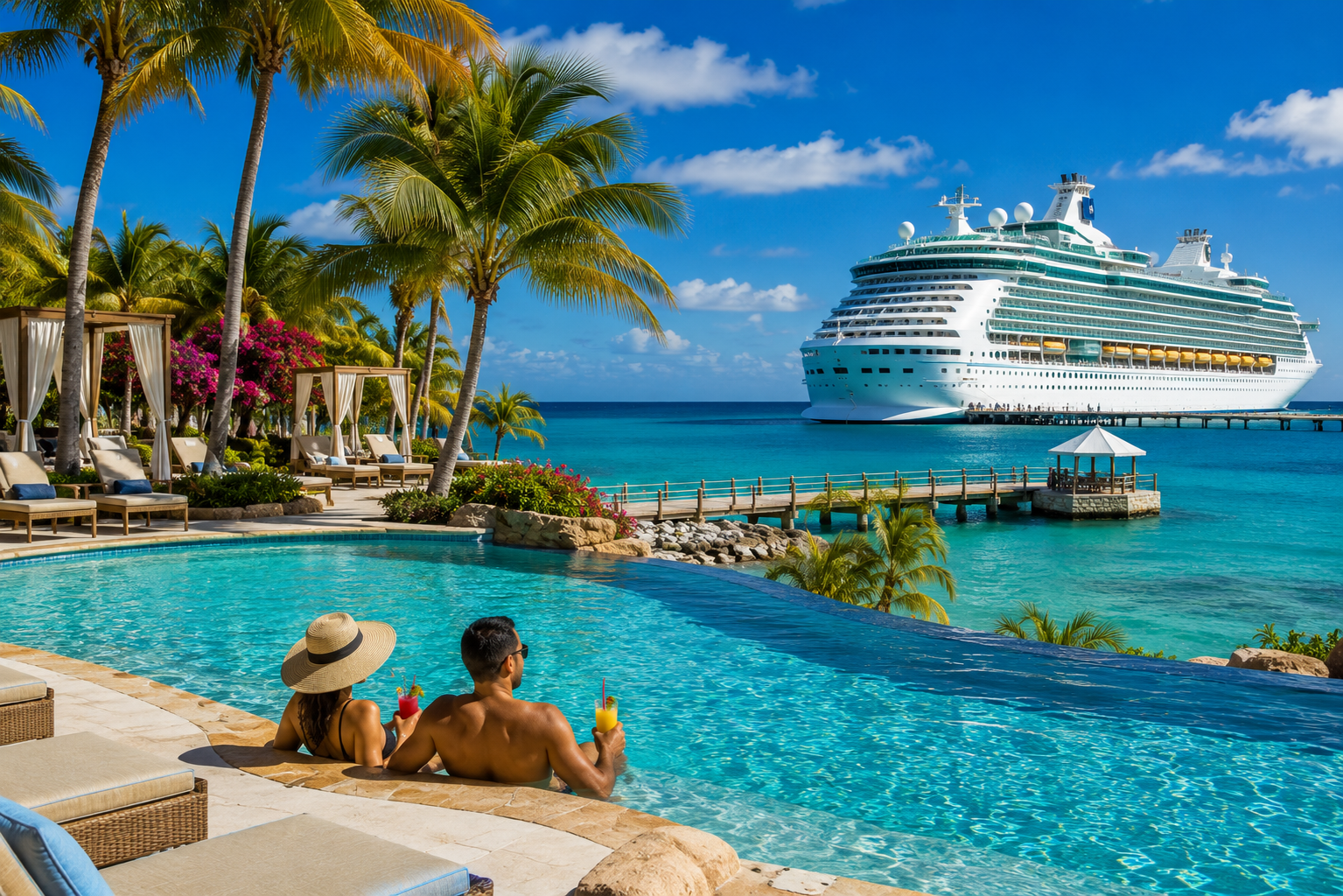
While 1.2 million visitors crowd into 11 U.S. host cities, Caribbean resorts and cruise ships are quietly delivering the best summer vacation conditions in years — with reduced European demand and exceptional availability.
The World Cup 2026 Travel Opportunity Nobody Is Talking About
Why This Summer May Be the Best Time to Take a Caribbean or International Trip
Here is the travel intelligence that makes this World Cup 2026 travel guide genuinely different from every other one published this week. Most guides focus on how to travel to the World Cup. This section explains why not going to the World Cup — and taking a different trip instead — may be the smartest travel decision of 2026.
When 1.2 million international visitors concentrate into 11 U.S. cities over 39 days, they leave behind a gap in the global vacation market. European travelers — who normally dominate Caribbean resort and Mediterranean cruise bookings in July — are booking fewer international trips this summer because the World Cup is consuming their summer travel budget and attention. According to Cirium aviation data, European bookings to the U.S. for July 2026 are already down 14 percent compared to last year. Furthermore, the travelers who normally compete with Americans for Caribbean resort availability and cruise cabin inventory are either attending the World Cup or staying home.
The result is a window of opportunity. Caribbean resorts are seeing better-than-usual summer availability. Cruise lines are offering competitive summer sailings. International destinations that attract European summer visitors are experiencing lower competition for the best properties and experiences. Consequently, summer 2026 is an extraordinary time to take a premium vacation outside the World Cup host cities — at prices and availability levels that are genuinely better than a typical summer offers. Use our free Destination Crowd Checker to identify the best-value, least-crowded destinations right now.
Every summer I track the patterns that create travel opportunities most people miss. This summer, the opportunity is clear: while everyone is fighting over World Cup hotel rooms in New York and Los Angeles at 10 times the normal rate, there are extraordinary Caribbean resort packages, Alaska cruise sailings, and European itineraries available at favorable pricing because European summer demand has shifted. If a World Cup vacation is your dream, I can help you navigate it correctly. If a genuinely luxurious summer escape is what you actually want, I can build you something extraordinary that nobody else is even looking at right now. Either way, the conversation starts the same place. Book your free summer travel consultation here.
World Cup 2026 Travel Guide: Visa, Safety, and Practical Information
What International Visitors to the U.S. Need to Know
For international visitors attending World Cup 2026 matches in the United States, entry requirements are straightforward. U.S. and Canadian citizens do not need a visa to attend matches within the U.S. or Canada, nor do they need a traditional visa for short stays in Mexico. For visitors from countries that normally require a U.S. visa, FIFA has created a dedicated FIFA PASS visa tool — the only mechanism capable of bypassing appointment backlogs that currently stretch over 300 days at many U.S. consulates. According to Travel and Tour World, this tool should be used the moment a match ticket is confirmed — not after.
Travel Safety Advisories Active During World Cup 2026
Separate from the World Cup itself, TravelPulse’s May 2026 advisory report confirms that the Caribbean islands popular with summer travelers — Anguilla, Antigua and Barbuda, the British Virgin Islands, the Cayman Islands, and Dominica — all carry Level 1 advisories, meaning travelers are advised to exercise normal precautions. These destinations are fully safe for summer 2026 travel and are unaffected by World Cup congestion. Moreover, the U.S. State Department has also issued enhanced health screening requirements for travelers returning from the Democratic Republic of Congo, Uganda, and South Sudan due to the WHO-declared Ebola Public Health Emergency — these requirements apply specifically to travelers who have been present in those countries and are not relevant to Caribbean or European travelers. Use the free Trip Readiness Checklist to verify all entry requirements before any international departure this summer.
The travelers who navigate summer 2026 best are the ones who understood the World Cup’s impact early — and either planned around it or used it to find extraordinary vacation opportunities nobody else spotted.
Plan your summer 2026 travel around the World Cup with free tools: Destination Crowd Checker · Vacation Budget Calculator · Cruise vs. All-Inclusive Comparator · Cruise Line Matcher · Travel Insurance Checker · Trip Readiness Checklist. All 9 tools completely free at the Etravels Everywhere Travel Tool Hub.
Summer 2026 Travel Is More Complex Than Any Previous Year.
Navigate It With an Expert.
I am Emoni Davis, certified travel advisor and founder of Etravels Everywhere. Whether you want to experience the World Cup in a host city, escape it entirely for a Caribbean resort, or find the extraordinary summer opportunity hiding in the World Cup’s shadow — a 20-minute consultation gives you a clear, personalized summer travel strategy. The window is now. The prices move daily.
Book My Free Summer Travel Consultation Check My Destination CrowdsFrequently Asked Questions: World Cup 2026 Travel Guide
Attending and Host City Questions
Which U.S. cities are hosting the 2026 FIFA World Cup?
The 11 U.S. host cities for FIFA World Cup 2026 are New York/New Jersey (MetLife Stadium — hosting the Final), Los Angeles (SoFi Stadium — hosting a semifinal), Dallas (AT&T Stadium), Miami (Hard Rock Stadium), Seattle (Lumen Field), San Francisco Bay Area (Levi’s Stadium), Boston (Gillette Stadium), Atlanta (Mercedes-Benz Stadium), Houston (NRG Stadium), Philadelphia (Lincoln Financial Field), and Kansas City (Arrowhead Stadium). Additionally, three Canadian cities host matches: Toronto and Vancouver. Mexico City’s Estadio Azteca hosts the opening match. The tournament runs from June 11 through July 19, 2026. Use our free Destination Crowd Checker to see what to expect in specific host cities during the tournament.
How much more expensive are hotels in World Cup 2026 host cities?
Hotel pricing in World Cup 2026 host cities varies dramatically by city and match dates. Some hotels near stadiums in New York are already pricing match-night rooms at 15 to 20 times their normal summer rates. More broadly, host city hotels are running 30 to 300 percent above normal summer rates depending on proximity to stadiums and the significance of matches scheduled. Kansas City and Dallas offer the most competitive pricing among host cities. New York, Los Angeles, San Francisco, and Miami carry the highest premiums. If your summer travel touches any host city, booking with refundable cancellation policies immediately is the strongest protection against further price increases.
Alternatives and Smart Travel Questions
Is it better to avoid World Cup host cities and travel elsewhere this summer?
For travelers not attending matches, avoiding World Cup host cities during match dates is the smarter strategy. The combination of hotel price premiums, airport congestion, and city-wide crowd management measures makes host cities genuinely difficult to enjoy as regular summer vacation destinations during the tournament. Instead, summer 2026 presents an extraordinary window for Caribbean, Alaskan, and international travel. European summer demand for destinations outside the World Cup is reduced — European bookings to the U.S. are down 14% this summer according to Cirium data — creating better availability and more competitive pricing at premium international destinations. A certified travel advisor can identify which specific destinations are offering the best summer 2026 value right now. Book a free consultation here.
Do I need a visa to attend World Cup 2026 matches in the United States?
U.S. and Canadian citizens do not need a visa to attend matches within the U.S. or Canada. Citizens of countries that normally require a U.S. visa must apply through standard channels, but FIFA has created a dedicated FIFA PASS visa tool specifically to help tournament attendees bypass the standard consulate appointment backlog — which currently stretches over 300 days at many U.S. consulates globally. This tool should be used immediately upon ticket confirmation. For cross-border travel into Mexico for the opening match at Estadio Azteca, U.S. and Canadian citizens do not require a visa for short stays. Always verify current entry requirements with official government sources before departing. Use our free Trip Readiness Checklist to prepare all documentation before departure.
What is the best way to experience the World Cup 2026 without a match ticket?
FIFA Fan Festivals in each host city are free to attend and feature giant screens broadcasting all matches live, full tournament atmosphere, food vendors, cultural programming, and entertainment. According to SmartSMS Solutions’ World Cup travel guide, Fan Festivals provide the complete World Cup energy without the ticket cost — and without the extreme pricing that surrounds stadium zones on match days. Additionally, watching matches at neighborhood bars and restaurants near (but not adjacent to) stadiums creates a genuine community atmosphere that many experienced World Cup travelers prefer to the stadium experience itself. For any Fan Festival or match-day planning in a host city, our free Destination Crowd Checker helps identify which areas will be most and least congested during specific match windows.